



Grease is a sneaky thing. It quietly coats the walls of your ducts, pools at every corner and bend, settles onto fan blades that you probably never even think about, and builds up over months before anyone even notices that something is off. By the time the owner of that Inverell café or restaurant manager realises that there’s a problem, the grease has usually built up to the point where it’s not just a routine maintenance issue, but a genuine fire hazard.
In the Inverell Shire, the council has kitchen conditions coming under the Food Act 2003, which means kitchen cleanliness is part of the local compliance framework that inspectors actually look at. And on top of that, there are NSW Building Commission regulations (due to kick in from 13 February 2026) that say building owners of certain types of buildings need to keep their essential fire safety measures in line with AS 1851-2012. When it comes to commercial exhaust cleaning Inverell, the maintenance obligations laid out in that standard apply.
What the Exhaust System Actually Covers?
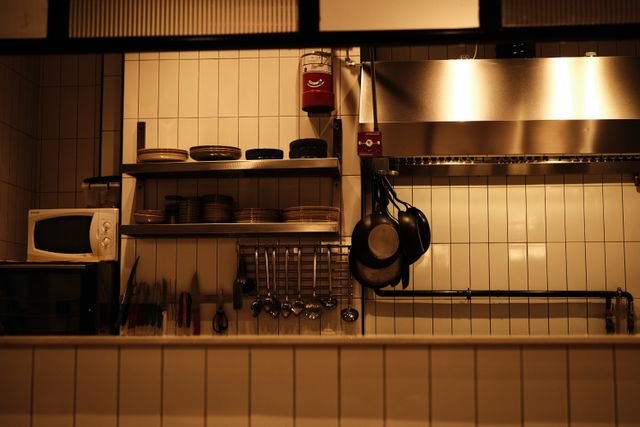
Most of us think of the rangehood when we think about exhaust cleaning. But the truth is, that’s just the beginning. A commercial exhaust system is a complex beast, running from the hood face through baffle or mesh filters, into sealed ductwork, around bends, along horizontal runs where grease loves to pool, and right on out through the rooftop fan housing and discharge point.
Each of those areas is a separate target for cleaning; you can’t just focus on the range hood in isolation:
- Baffle filters absorb the first wave of grease vapour, and get clogged in a hurry under high-output cooking.
- Horizontal duct runs are where grease pools at every low point, especially when it’s turned a corner.
- Fan blades are where deposits build up, causing mechanical problems and reducing airflow.
- The rooftop discharge point is usually the one part that gets skipped during standard maintenance visits.
The AIRAH Best Practice Guide for Commercial Kitchen Exhaust Management (published back in 2022) gives us a better way to do things. Rather than just following a flat calendar schedule, it says we should be measuring actual grease thickness and adjusting cleaning frequency based on how much we’re cooking and how fast grease is building up. You’d be surprised just how much of a difference that makes; a high-volume venue with fryers and chargrills is going to build up grease at a rate that’s completely different to a low-volume café.
What Happens When Cleaning Is Deferred?
As soon as a fire breaks into a kitchen exhaust system, the grease coating the duct walls starts acting as fuel. The AIRAH guide says that duct fires can reach an astonishing 1,000 degrees Celsius in just minutes; that’s enough to set off combustible materials outside the duct through heat radiation alone. And to make matters worse, because fire dampers aren’t allowed in kitchen exhaust ductwork, once the fire gets in it’s free to travel the full length of the duct and spread to other parts of the building.
And that’s bad news for your insurance company. You see, insurance policies often exclude claims if you can’t prove that you’ve been following policy terms. A cleaning certificate that documents the date, scope and grease levels before and after each service is the kind of paperwork that shows you were actively on top of it all.
The Gap Between Staff Cleaning and a Professional Exhaust Clean
Cleanliness is applied to what can be seen. Cleaning of an exhaust system according to professional guidelines requires cleaning of the whole system from its inlet up to its outlet on the roof, utilising industrial degreasing agents and high-pressure equipment designed for removing heavy deposits in the inaccessible ductwork of an exhaust hood.
Documentation after a cleaning procedure includes measurements of grease level in selected sections of the exhaust system. It provides the proof that meets the requirement of the AIRAH evidence-based approach and serves as documentation needed by AS 1851-2012 in relation to fire safety regulations. For operators in Inverell, keeping such a document on file becomes a simple task in light of NSW legislation.