



It is easy to underestimate the psychological impact of a bathroom because we tend to take the room for granted, but environmental psychologists argue that small, often-used spaces can have a stronger cumulative effect on stress than larger rooms that are visited less often, and the average Australian will spend 30 to 60 minutes in the bathroom each day. And with repeated exposure to the same environmental stimuli, the colours, layout, lighting, and visual complexity of the space are not just passive background elements.

Why Colour Choice Is More Physiological Than Aesthetic?
Colour information can be processed in the brain within milliseconds, and the effect of colour can be physiologically measurable, not just perceived. In a 2025 study published in Building and Environment, researchers used virtual reality and brain-imaging technology to explore stress recovery in various colour environments. They found that blue and white surroundings significantly decreased anxiety indicators and decreased prefrontal cortex activity linked to stress, while red and purple environments had the opposite effects. The choice of colour for a bathroom is not an aesthetic choice; it is a decision about what the nervous system experiences every day.
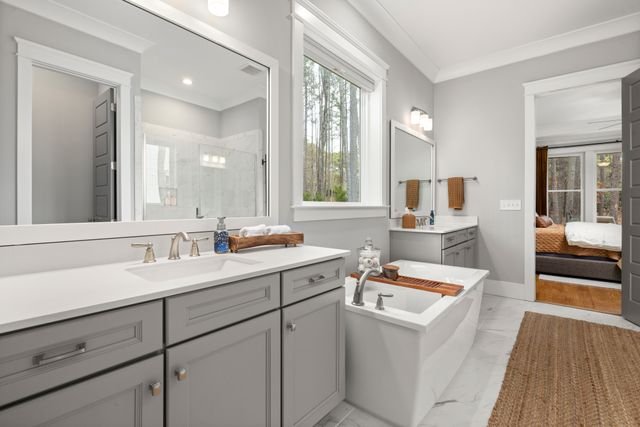
Those findings were corroborated by physiological research based on measures of heart rate variability, which demonstrated that colour saturation is as important as hue: more stable autonomic responses were elicited by the softer, lower-saturation versions of the colours than by the highly saturated versions. This is also why muted blues, soft greens, and warm neutrals are gaining favour in contemporary Australian bathrooms (and bathroom renovations Mandurah and throughout the country) as homeowners seek spaces that calm rather than energise. It is not the vague language of wellness, but rather a proven connection between colour characteristics and physiological stress response.
Layout Affects The Brain’s Need For Predictability
In fact, predictability is one of the primary variables in stress reduction identified by behavioural psychology, and humans are hardwired to seek environments that do not demand extra effort or mental processing to navigate, which bathrooms with confusing layouts, blocked pathways, or poorly placed fixtures do by requiring more mental processing than a well-organised space. The brain perceives extraneous navigation demands as low-level friction, and that friction adds up over every use of the room, which over the years makes a significant difference in cumulative stress exposure.
Research in spatial cognition demonstrates that intuitive movement patterns (straight paths to the sink, logical placement of shower, toilet, and storage) minimize demands on decision-making during normal use, unnecessary cognitive processing is always correlated with increased perceived comfort and satisfaction within a space, and a bathroom that doesn’t cause friction during the morning routine is producing a measurably lower stress response than one that requires even minor navigation adjustments every time it is used, and that difference is compounded over thousands of daily uses over the life of the renovation.
Clutter Is A Stress Source That The Research Takes Seriously
There is a significant and relevant body of neuroscience research backing up this relationship between visual clutter and stress. Clutter competes for attention in a way that the brain cannot fully suppress; when too many products, accessories, and decorative elements are in the visual field, the brain is expending energy filtering distractions, not resting. Bathrooms are especially susceptible, with so many functional items that naturally collect over time, creating visual noise that is not harmless. Research into visual processing consistently demonstrates that the fewer visual distractions in a space, the more focused and less mentally fatigued the users of the space will be.
Lighting Shapes How Everything Else Is Perceived
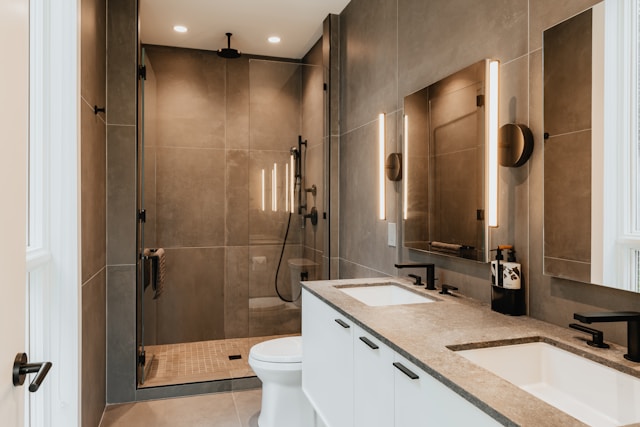
The one variable that either supports or undoes every other design decision in a bathroom is lighting, because lighting affects how colours are perceived, how spacious a room feels, and how alert or relaxed the brain is. Light, for example, is bright, cool-toned lighting that promotes alertness in the morning, while warm lighting promotes relaxation in the evening. Because the physiological response to lighting cannot be compensated for with colour or layout alone, getting both into the same space through layered or adjustable lighting systems is one of the most evidence-based investments a bathroom renovation can make.
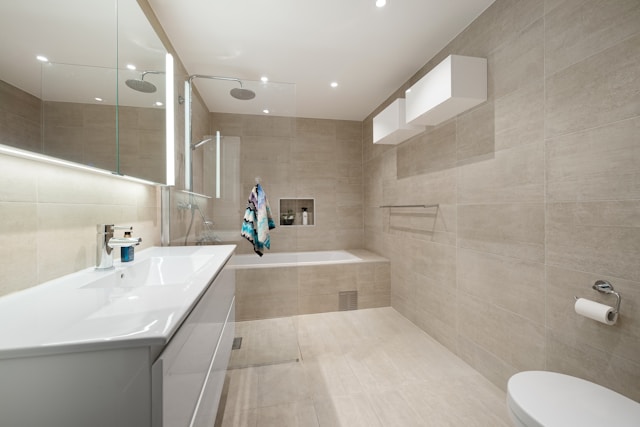
Environmental perception research also indicates that lighting affects perceived spaciousness, and strategically placed lighting increases the perceived size of a room by up to 20 per cent in interior environment studies; in bathrooms where physical dimensions cannot be altered, that perceptual shift minimises feelings of confinement that lead to psychological discomfort. Overall, the evidence from colour, layout, clutter, and lighting all point in the same direction: bathroom design decisions made with the psychological impact in mind create spaces that feel significantly different to inhabit on a daily basis not because they look better, but because the brain responds to them differently.